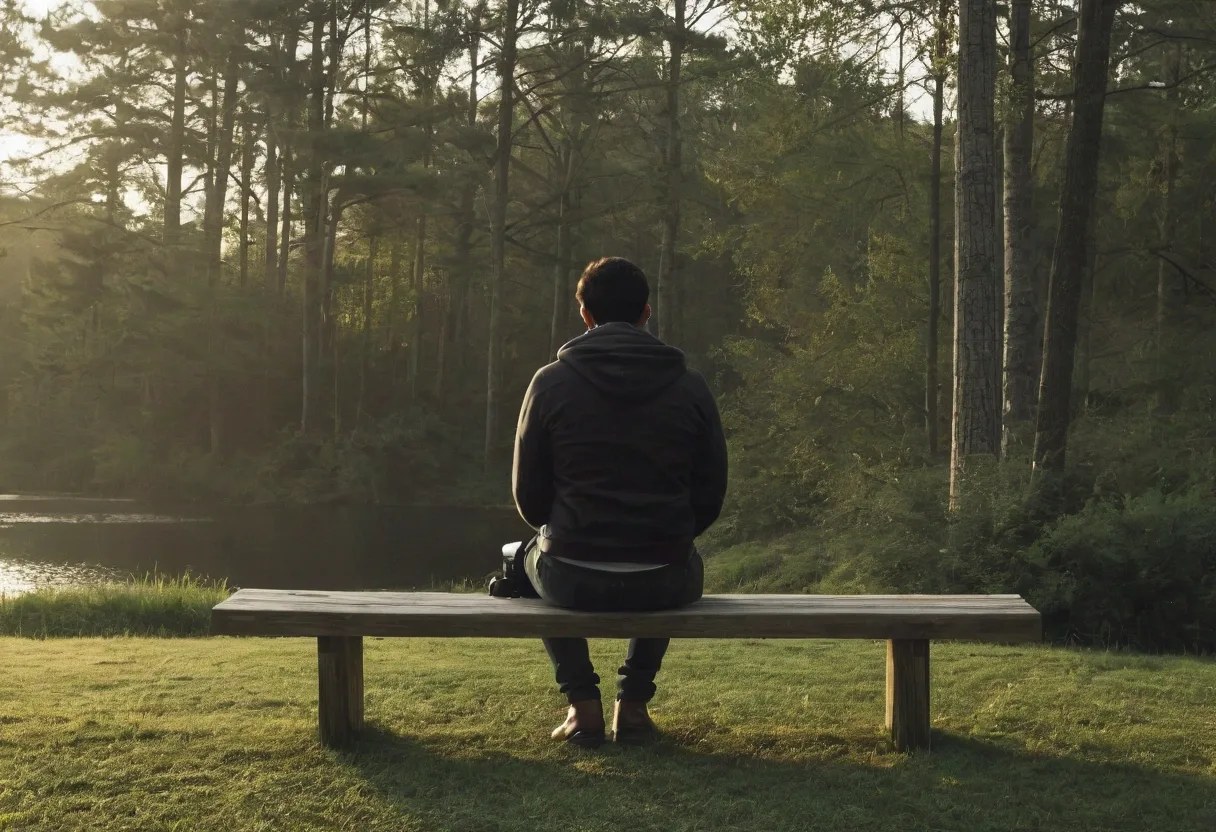
Slow Living: The New Art of Restoring Your Mind and Body
Slow living is not about becoming lazy, abandoning ambition or escaping modern life. It is about creating enough space for the human body and mind to recover. At the center of this movement is a growing interest in stress regulation, deep rest, sleep, nature, mindfulness, intentional movement and periods of reduced stimulation.
The popular phrase “nervous-system reset” is useful as a metaphor, but biologically the goal is not to reset the nervous system like a computer. The healthier goal is to help the body become better at moving between activation and recovery.
Why Is Slow Living Suddenly Everywhere?
For much of the modern era, speed was associated with progress. Faster communication was better. Faster transportation was better. More productivity was better. Being constantly available was often interpreted as being committed, successful and ambitious.
Technology has taken this principle to an extreme. A smartphone can deliver messages, news, entertainment, advertisements, social interaction and work requests within seconds. Artificial intelligence can generate information instantly. Social platforms are designed to keep attention moving from one piece of content to the next.
The problem is not technology itself. The problem is that the human nervous system did not evolve for an environment in which stimulation can continue almost indefinitely.
This is one reason slow living is becoming more attractive. The movement represents a cultural correction: if modern life is constantly accelerating, recovery has to become intentional.
The 2026 wellness landscape reflects this shift. The Global Wellness Summit has identified “neurowellness” and nervous-system regulation as major emerging themes, alongside a broader movement away from excessive optimization and toward recovery, emotional wellbeing and feeling more connected to everyday life.
Slow living means deliberately reducing unnecessary speed, stimulation and complexity so you can give greater attention to health, relationships, surroundings and the present moment.
It does not mean doing everything slowly. It means being more intentional about what deserves your energy.
What Does “Nervous System Regulation” Actually Mean?
The nervous system is the body's communication and control network. Among its many functions, the autonomic nervous system continuously adjusts processes such as heart rate, blood pressure, breathing and digestion.
One part of this system, the sympathetic nervous system, helps prepare the body for action. It becomes more active when you need to concentrate, exercise, respond to danger or deal with a demanding situation.
The parasympathetic system is strongly associated with rest, digestion and recovery. Healthy functioning requires both systems. You do not want to be permanently relaxed any more than you want to be permanently stressed.
A healthy nervous system should be able to activate when circumstances demand it, then return toward recovery when the demand has passed. The real problem is not activation itself. The problem is difficulty recovering from repeated activation.
The “Reset” Myth
The expression “nervous-system reset” has become extremely popular online. You will find it attached to breathing exercises, cold plunges, meditation, massage, yoga, sound therapy and many other practices.
But there is an important distinction.
Your nervous system does not have a reset button. You cannot simply press a biological switch and return your body to a factory-default state.
What you can do is create conditions that make recovery easier and improve your ability to respond appropriately to stress.
Think of it less like restarting a computer and more like improving a vehicle's suspension. The road will still have bumps. The objective is to make the system better at absorbing them and returning to stability.
Why Constant Stimulation Is Exhausting
Modern overstimulation does not necessarily come from one dramatic event. It often comes from hundreds of small interruptions.
- A notification appears.
- You check an email.
- A social-media video starts.
- A news headline demands attention.
- A work message arrives after hours.
- You switch between several tasks.
- You consume information while eating.
- You continue scrolling when you intended to sleep.
Individually, these events seem insignificant. Collectively, they can create an environment in which the brain rarely receives a genuine period of low stimulation.
This is why sensory quiet has become an important part of the slow-living movement. Sometimes recovery does not require adding another activity to your schedule. It requires removing activity.
Deep Rest Is More Than Sleep
Sleep is fundamental, but rest is broader than sleep.
A person can sleep for eight hours and still feel mentally exhausted if the waking day is filled with constant demands, screens, noise, multitasking and emotional stimulation.
Deep rest can include several forms of recovery:
- Physical rest: allowing muscles and the body to recover.
- Mental rest: reducing continuous problem-solving and decision-making.
- Sensory rest: reducing noise, screens, notifications and visual stimulation.
- Emotional rest: creating spaces where you do not have to perform or please everyone.
- Social rest: balancing social interaction with solitude.
- Creative rest: allowing the mind to wander without demanding an immediate productive result.
This explains why sitting quietly in a park can sometimes feel more restorative than spending an hour watching short-form videos. Both are technically “resting,” but they create very different cognitive environments.
Sleep: The Foundation of the Slow-Living Movement
Sleep has become one of the central pillars of modern wellness because it affects far more than tiredness. Sleep participates in memory, emotional regulation, metabolic processes, immune function and physical recovery.
The emerging wellness trend is also moving away from treating sleep as something that happens after everything else is finished. Instead, sleep is increasingly being treated as a fundamental part of the day's architecture.
That means creating an evening environment that tells the brain: the day is ending.
- Keep a relatively consistent sleep and wake schedule.
- Reduce intense stimulation close to bedtime.
- Make the bedroom dark, quiet and comfortable.
- Give yourself a transition period between work and sleep.
- Avoid turning the final minutes of the day into an information marathon.
The principle is simple: do not expect your brain to go from maximum stimulation to sleep instantly.
The Power of Doing Nothing
One of the most radical aspects of slow living is also one of the simplest: deliberately doing nothing for a while.
No podcast. No video. No scrolling. No productivity goal. No multitasking.
At first, this can feel uncomfortable. Many people discover that when external stimulation disappears, their thoughts become much more noticeable.
That discomfort is not necessarily a sign that something is wrong. Sometimes it simply means you have become accustomed to continuous stimulation.
Quiet periods give the mind an opportunity to process experiences, notice emotions and recover from the constant demand to respond.
Nature: The Original Low-Stimulation Environment
Nature has become an important part of the modern slow-living movement because it provides a naturally different sensory environment.
A forest does not send notifications. A coastline does not ask you to answer an email. Walking outside does not require you to consume a stream of information.
Research and clinical commentary increasingly support spending time in natural environments as part of stress management. Even relatively simple activities such as walking outdoors can provide a useful transition away from sedentary, screen-heavy routines.
You do not need an expensive wellness retreat. A local park can be enough.
Mindfulness Without the Mysticism
Mindfulness is often presented as something complicated, but the basic idea is surprisingly straightforward: pay attention to what is happening now without immediately judging or reacting to it.
You can practice mindfulness while sitting, walking, eating, drinking coffee or even washing dishes.
A 2026 systematic review and meta-analysis of 17 randomized controlled trials involving 1,641 non-clinical adults found that mindfulness-based interventions were associated with significantly lower perceived stress compared with controls.
That does not mean mindfulness eliminates stress or replaces medical care. It means there is meaningful evidence that structured mindfulness practices can be useful tools for managing perceived stress.
Breathing: The Simplest Tool You Carry
Breathing is particularly interesting because it is both automatic and voluntarily controllable.
When people become stressed, breathing can become faster and shallower. Deliberately slowing the breath can provide a simple way to shift attention away from external stimulation and toward the body.
A practical starting point is slow, comfortable diaphragmatic breathing. You do not need to force extremely deep breaths or hold your breath for long periods.
Breathing exercises should feel comfortable. If you become dizzy, uncomfortable or light-headed, stop and return to normal breathing. People with certain medical conditions should ask a qualified healthcare professional before beginning specialized breathing practices.
Movement Without the “No Pain, No Gain” Mentality
Slow living does not mean becoming physically inactive.
In fact, movement is an important part of nervous-system health and general wellbeing. The difference is that slow living challenges the assumption that every workout must be intense.
Walking, cycling, swimming, stretching, yoga, mobility work and moderate aerobic exercise can all have a place in a balanced lifestyle.
Sometimes the most useful movement is simply getting out of the chair. If you have spent several hours sitting at a computer, a short walk can change your physical state and provide a mental transition as well.
Exercise should support your life—not become another source of pressure.
The Rise of the Anti-Optimization Lifestyle
For years, wellness culture increasingly revolved around optimization: tracking calories, measuring sleep, counting steps, monitoring heart rate, maximizing productivity and collecting increasingly sophisticated health data.
Those tools can be useful. The problem begins when measurement becomes another source of anxiety.
The emerging “anti-optimization” movement is not necessarily anti-science. It is more accurately anti-obsession.
Instead of asking: “Did I optimize today?” people are increasingly asking: “Do I actually feel better?”
That is a significant philosophical shift.
If tracking your sleep makes you anxious about your sleep, the tracker may have stopped serving its original purpose.
How to Build a Slow-Living Lifestyle Without Changing Your Entire Life
The biggest mistake is turning slow living into another complicated self-improvement project.
You do not need a cabin in the mountains, an expensive meditation retreat or a house full of wellness technology.
Start by changing the rhythm of ordinary life.
Create a morning buffer
Do not allow notifications to determine the emotional tone of your first five minutes. Give yourself a short period before checking messages and social media.
Protect periods of uninterrupted focus
Group messages and notifications instead of responding to every interruption immediately. Constant context switching is mentally expensive.
Take a daily outdoor walk
Even a short walk can create physical movement, daylight exposure and distance from the screen.
Schedule silence
Spend 10–20 minutes without music, podcasts, videos or scrolling. Let your brain experience low stimulation.
Create an evening transition
Give yourself a recognizable period between work and sleep. Dim the stimulation, reduce unnecessary decisions and allow the day to slow down.
Choose one activity that has no productivity purpose
Read, walk, sit outside, draw, listen to music or talk with someone you care about simply because you enjoy it.
A Practical Daily “Nervous-System-Friendly” Routine
You do not need to follow this schedule perfectly. The purpose is to create a rhythm that alternates periods of activation with periods of recovery.
A simple example
What About Cold Plunges, Vagus-Nerve Devices and Other “Reset” Hacks?
This is where the wellness industry requires some skepticism.
Cold exposure, acupressure mats, wearable devices, vagus-nerve stimulation products and other techniques can be interesting, but popularity is not the same thing as scientific validation.
Cold exposure in particular can initially activate the body's stress response before any later calming effect. Consumer vagus-nerve devices also should not automatically be considered equivalent to clinically established medical treatments.
Before spending hundreds of dollars on a device, consider the fundamentals first:
- Are you sleeping adequately?
- Do you move regularly?
- Do you spend time outdoors?
- Do you have periods without screens?
- Are you eating reasonably well?
- Do you have meaningful social connections?
- Do you give yourself genuine downtime?
The boring answers are often the most powerful.
Slow Living Does Not Mean Escaping Ambition
One of the biggest misunderstandings about slow living is that it is fundamentally anti-productivity.
It is not.
There is a difference between speed and effectiveness.
Moving quickly between dozens of tasks can create the feeling of productivity while producing shallow results. A slower approach can sometimes allow deeper concentration, better decisions and higher quality work.
The objective is not to eliminate ambition. It is to eliminate the assumption that exhaustion is proof of ambition.
Common Misconceptions About Slow Living
“Slow living means doing nothing.”
Not true. Slow living is about intentionality, not inactivity. You can have ambitious goals while still protecting recovery.
“You need to live in the countryside.”
Not at all. A five-minute quiet period in an apartment can be more useful than an expensive retreat if it becomes part of your routine.
“You must meditate every day.”
Meditation can be useful, but it is not the only route to recovery. Walking, nature, breathing, hobbies, social connection and quiet time can all contribute.
“A nervous-system reset fixes chronic stress.”
No single technique can solve an unhealthy lifestyle, persistent sleep deprivation, a toxic environment or an untreated medical or psychological condition.
When Stress Is More Than a Lifestyle Problem
Lifestyle practices can be valuable, but they should not be used to dismiss serious symptoms.
Persistent insomnia, severe anxiety, panic attacks, depression, unexplained physical symptoms, significant changes in appetite or functioning, or stress that consistently interferes with everyday life deserve professional attention.
Slow living can complement professional care. It should not be presented as a replacement for it.
The Deeper Meaning of Slow Living
Perhaps the most important part of this movement has little to do with meditation apps or wellness retreats.
It is about reconsidering what we believe a good life looks like.
If every empty minute must be filled, every hobby must become productive, every workout must be optimized and every night of sleep must be scored, then even wellness becomes another form of work.
Slow living proposes something different: some parts of life do not need to produce anything.
A walk can simply be a walk. A meal can simply be a meal. A conversation can exist without being photographed. An evening can contain nothing remarkable. Rest does not need to justify itself.
The Real Reset
The modern world will probably not become slower. Technology will continue accelerating. Artificial intelligence will become more capable. Information will continue arriving faster.
That makes the ability to choose when not to engage increasingly valuable.
The future of wellbeing may therefore not be about escaping technology, but learning how to live alongside it without allowing it to control every moment of attention.
Slow living is not about slowing your entire life down. It is about learning when to accelerate—and when to stop.
Research & Further Reading
This article draws on current 2026 wellness research and reporting, including work on mindfulness, sleep, nervous-system regulation and the emerging shift toward lower-stimulation lifestyles.
- Global Wellness Summit — 2026 Future of Wellness trends.
- Global Wellness Institute — 2026 wellness tourism and sleep trends.
- npj Mental Health Research — 2026 systematic review and meta-analysis of mindfulness-based interventions and perceived stress.
- Current clinical commentary on nervous-system “reset” culture, regulation and recovery.
Comments (0)