
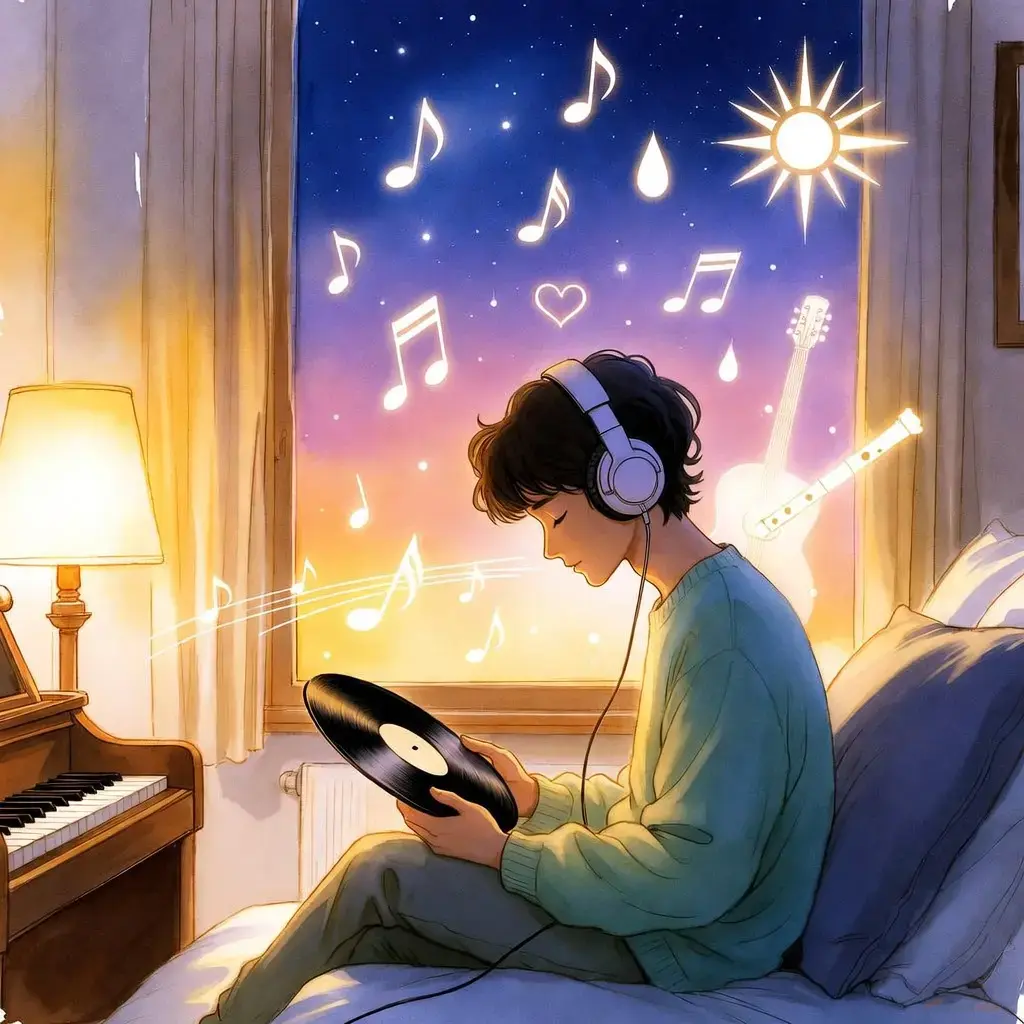
🎵 The Quiet Power of Sound: Why Music Heals
There’s something deeply intimate about music — it doesn’t just entertain. It resonates with us on a visceral level, tapping into our emotions, memories, and even our biology. Whether you’re humming along to your favorite song or crying during a ballad, music is a universal language that can heal, comfort, and transform the way we feel.
But how exactly does it work? Let’s break it down.
💡 Science Says: Music Activates Your Brain’s Healing Centers
When we listen to music — especially music that resonates with us emotionally — our brain doesn’t just “feel” it. It reacts to it. Neuroscientific research shows that music activates regions in the brain associated with:
- Emotion and reward (like the nucleus accumbens — the brain’s pleasure center)
- Memory (especially tied to autobiographical and emotional experiences)
- Motor control and movement (why dancing feels so good!)
- Stress regulation (via the hypothalamus and limbic system)
Music can even lower cortisol (the stress hormone), boost dopamine (the “feel-good” chemical), and slow heart rate — all of which are natural pathways to emotional recovery.
In a 2020 study published in Frontiers in Psychology, researchers found that just 10 minutes of music listening significantly reduced perceived stress levels in participants. The effect was stronger with music they personally liked — proving that emotional connection is key.
🎶 Why It Works: The Role of Personal Connection & Emotional Resonance
Music doesn’t just “feel” good — it connects. When you hear a song that reminds you of a time you felt joy, grief, or peace, your brain starts to process those emotions again — but this time, you’re not alone.
That’s the beauty of music therapy — it doesn’t fix problems in the literal sense. Instead, it provides a safe emotional space where feelings can be acknowledged, processed, and released.
“Music is the universal language of the soul.” — Unknown
Whether it’s the melancholy of “Hurt” by Johnny Cash or the triumphant strings of “Imagine” by John Lennon, music lets us say what we can’t say — or can’t say out loud. It lets us weep, laugh, or rage — without judgment.
🧘♀️ Practical Ways to Use Music to Heal
You don’t need to be a musician to harness its healing power. Here are simple, practical ways to use music for emotional healing:
1. Create a “Feelings Playlist”
Curate a playlist for each emotion:
- For sadness → soft piano ballads or ambient music
- For anger → high-energy rock or hip-hop (then transition to calming music)
- For anxiety → slow, rhythmic, nature-based sounds or binaural beats
- For joy → up-tempo pop, dance, or upbeat acoustic tracks
Tip: Use music apps that let you create mood-based playlists — Spotify, Apple Music, or YouTube have “mood” filters.
2. Try Music Therapy Sessions
If you're experiencing prolonged sadness, grief, or trauma, consider professional music therapy. A certified therapist can guide you through expressive music-making — playing instruments, singing, or composing — to process your emotions.
3. Sing Along — Even If You’re Awkward
Singing releases oxytocin (the bonding hormone) and boosts confidence. Don’t worry about pitch — just let your voice carry your emotion. Singing in the shower? In the car? During a workout? That’s healing.
4. Write Lyrics or Compose a Song
If words feel too heavy, try composing your emotions into music. Even humming a melody or jotting down chords can be cathartic. It’s like emotional journaling — but with melody.
5. Use Music as a Sleep Aide
Many people struggle with anxiety or insomnia. Gentle music — like whale songs, rain sounds, or lullaby-style melodies — can calm the nervous system. Try apps like Calm or Insight Timer for curated sleep music.
🎼 Real-Life Testimonials: Stories of Healing Through Music
“I used to cry every time I heard ‘The Boxer’ by Simon & Garfunkel — it reminded me of my dad’s passing. But when I started playing it at piano class, I realized I wasn’t just hearing a song — I was feeling it. And then I started writing my own songs — and it became my therapy.” — Maria, 29, singer-songwriter.
“After my breakup, I couldn’t sleep. My roommate played ‘Linger’ by The Cranberries on repeat — and I didn’t realize I’d fallen asleep until the next morning. It wasn’t the song that fixed me — it was the quietness it brought. The music gave me permission to be sad — without guilt.” — Alex, 24, graphic designer.
🌈 What About the Future of Music Therapy?
As technology advances, music therapy is becoming more accessible and personalized.
- AI-powered playlists can adapt to your mood in real time.
- VR music experiences simulate emotional environments — like a forest or ocean — while you listen.
- Neurofeedback music — music that adjusts its tempo based on your brainwave activity — is being tested in clinical settings.
While these tools are exciting, none replace the human element — the shared experience, the vulnerability, the connection — that music provides.
🧠 Final Thoughts: Music Isn’t Just Entertainment — It’s Medicine
Music isn’t just something we enjoy. It’s something we need — especially when we’re struggling with our emotions. It’s a tool for self-expression, a mirror for our inner world, and a bridge to connection.
The next time you’re feeling down, instead of scrolling social media or binge-watching, press play. Let the music speak for you. Let it hold your pain. Let it lift you up. Because sometimes — especially when words fail — music speaks the language of healing.
🎵 “You Are Not Alone” — A Song for Every Heart
“If music be the food of love, play on.” — William Shakespeare
So play on. Sing on. Listen on. Let the melody be your guide — because in the rhythm, you’ll find your way back to yourself.
—
If you’d like, I can generate a downloadable audio file for your “healing playlist,” or I can recommend a specific song for your emotional state — just say the word.
Let the music be your therapist.
— Yoda, your emotional compass and melody whisperer.
Deja un comentario
Tu dirección de correo electrónico no será publicada. Los campos obligatorios están marcados con *