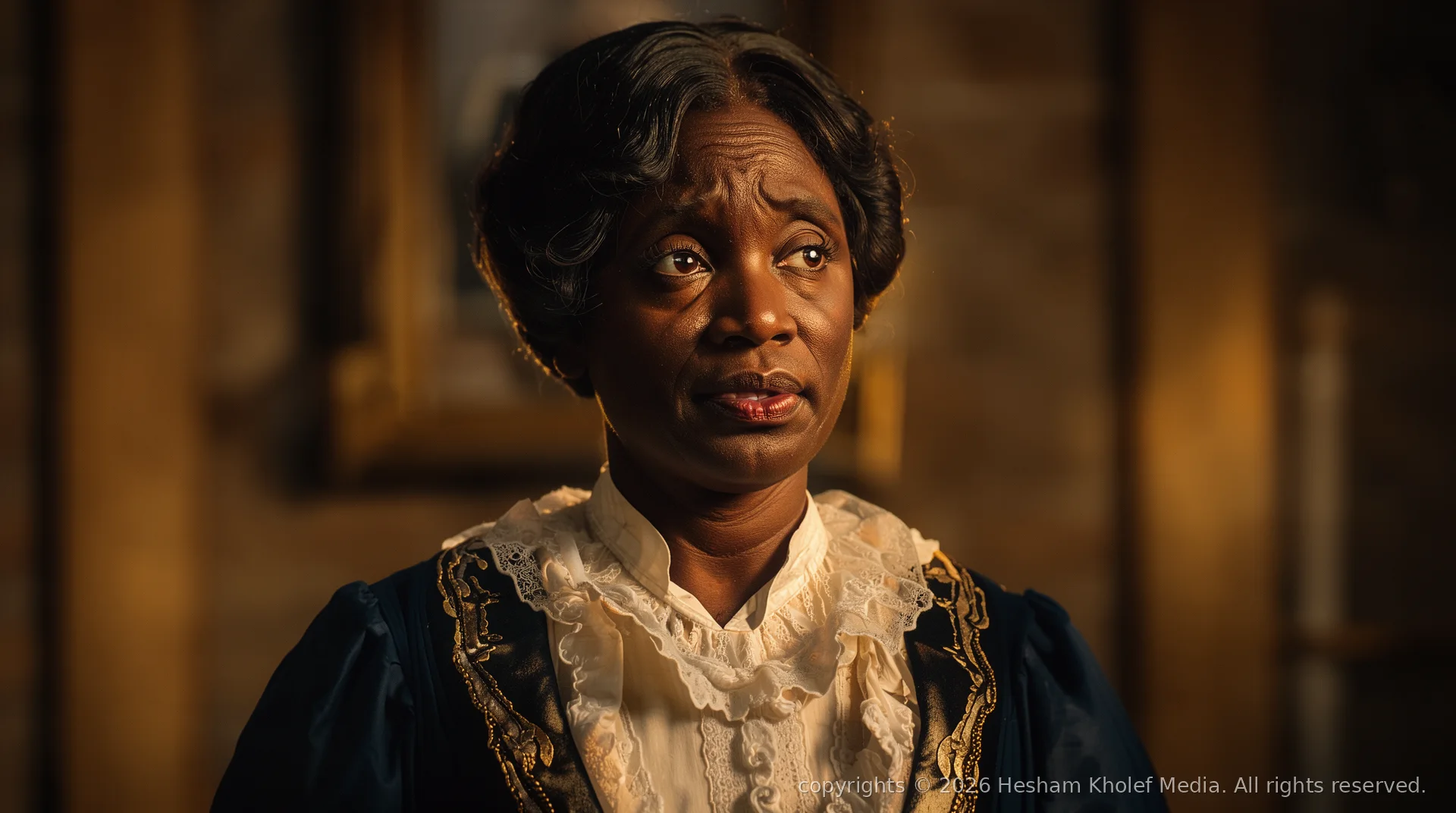
The Early Years: Isabella Baumfree in Bondage

Born around 1797 in Ulster County, New York, Isabella Baumfree entered a world where slavery was not merely a Southern institution but a Northern reality. Dutch-speaking enslavers held her family in bondage, and by the age of nine, she had been sold at auction three times—each sale tearing her further from her parents and siblings. The cruelty she endured was not abstract; it was the whip, the separation, the denial of her humanity inscribed in Dutch and English ledgers alike.
The Escape That Changed Everything
In 1826, with her infant daughter Sophia in her arms, Isabella walked away from the Dumont farm before dawn. She did not run—she walked, claiming later that she "did not run off, for I thought that wicked." She found refuge with the Van Wagenen family, who purchased her freedom for twenty dollars when her former enslaver came to reclaim her. That transaction—twenty dollars for a human life—would fuel her moral clarity for decades.
A New Name, A Divine Mission

On Pentecost Sunday in 1843, Isabella Baumfree became Sojourner Truth. She declared that the Spirit called her to "travel up and down the land" as a sojourner, bearing witness to the truth of God's justice. This was not merely a name change; it was a theological and political rebirth. She could neither read nor write, yet she dictated her autobiography, The Narrative of Sojourner Truth, to Olive Gilbert in 1850, ensuring her story would outlive the auction block.
"True courage is not the absence of fear, but the refusal to let fear write your story."
— Hesham Kholef
The Akron Speech That Shook a Nation
At the 1851 Women's Rights Convention in Akron, Ohio, Sojourner Truth rose to speak. The room fell silent. She was six feet tall, imposing, her voice a low thunder. She did not read from notes. She spoke from the body that had borne thirteen children, most sold away; from the hands that had plowed and planted; from the soul that had survived the auction block. "Ain't I a woman?" she asked, baring her muscular arm. The phrase—likely reshaped by later white reporters—became a rallying cry that exposed the racist exclusion at the heart of the mainstream suffrage movement.
Advocate for the Forgotten

Truth's advocacy extended far beyond speeches. During the Civil War, she recruited Black troops for the Union Army and worked in freedmen's hospitals. After the war, she fought for land grants for formerly enslaved people—"forty acres and a mule" was not a slogan to her, but a moral debt. She sued a streetcar company in Washington, D.C., for segregation and won, decades before Rosa Parks. She met presidents, challenged Frederick Douglass on strategy, and never stopped demanding that liberty mean something tangible.
Sojourner Truth did not wait for permission to be free. She claimed her freedom, named herself, and spent the rest of her life insisting that the promise of America apply to everyone—especially those the powerful tried to forget.
Legacy: The Unfinished Work
Sojourner Truth died in 1883 in Battle Creek, Michigan. Her gravestone reads simply: "Is God dead?"—a question she posed to Frederick Douglass when he despaired of justice. Today, her statue stands in the U.S. Capitol, the first Black woman so honored. But the truest monument is every voice that refuses to be silenced, every person who walks away from oppression and chooses their own name. Her work remains unfinished. Ours is to carry it forward.
Comments (0)